Josh made a beautiful thing and shared the process. This is inspiring to read, and if you haven't seen Josh's geometric paintings you should take a look. Also fun seeing discussion of this pop up on Hacker News and MetaFilter (of course).
 Tim Harford
"Trying to get some work done with an internet-enabled device is like trying to diet when there’s a mini-fridge full of beer and ice cream sitting on your desk, always within arm’s reach." Here’s yet another fascinating digital-habit-changing story. I like the connection he makes with economic psychology. I do think we're all working with the Endowment effect and Escalation of commitment as we consider the value of digitizing every aspect of our lives.
 Craig Mod
"...email has stayed, and has largely stayed decentralized, and from that — its ubiquity and lack of central authority — email has become one of the most boringly powerful publishing platforms around." Newsletters, amirite?! I agree that it feels like an exciting time for email and I really need to get back to posting my favorites. Are you thinking about starting your own newsletter? There's a guide for that: Newsletter Guide. And here's the obligatory Simpsons reference.
 latimes.com
I agree with this. Repeating a frame or an idea—even to mock it—distributes and strengthens that idea. I love Colbert but I stopped watching a long time ago. Laughing wasn't enough to make up for the disturbing source material. It reminds me again that the old Internet cliché don't feed the trolls is something the media hasn't adopted yet. See also the great way Jay Smooth put it: Don't Link to the Line Steppers.
 The Verge
"Figuring out how to fix those blurry image quizzes quickly takes you into philosophical territory: what is the universal human quality that can be demonstrated to a machine, but that no machine can mimic? What is it to be human?" Yeah, this. But also: DAMMIT THESE ARE BROKEN AND ANNOYING AND ON EVERYTHING.
 gq.com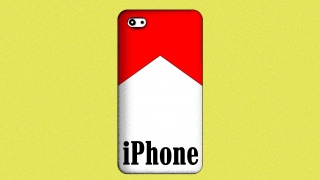
Speaking of digital habits, Cal Newport has a new book called Digital Minimalism. This GQ interview has some great gems on the rise of social media, like this: "It took this careful attention engineering, and cultural engineering, to try to make this seem innovative, and high-tech, and like you had to be doing this. If that falls apart, the whole thing goes." Ezra Klein also recently had him on his podcast: Cal Newport has an answer for digital burnout.
 Gizmodo
I never get tired of these stories where people change their digital habits. This piece by Kashmir Hill is an extreme example, but also a good illustration of how ubiquitous the major tech companies are. Understanding the often hidden architecture of our tech environment helps us make mindful decisions. A couple other posts in this genre I've enjoyed lately: Bye, Bye, Google by Bogdan Popa and Pulling the plug on Facebook by Drupal founder Dries Buytaert.

99pi Planchette

Can you spot the animal?
 Recode
Great news for Gimlet, especially for my favorite show Reply All. Congrats! Troubling aspect: could this signal the end of open web distribution of podcasts? Moving away from RSS to walled gardens would be a total buzzkill.
Update (2/6): It is so, Audio-First.
Update (2/6): It is so, Audio-First.

Ancient Phone Button
 The Outline
Listen up you stinklinguists! This formula for creating new, creative swear words is the crapgrenade you've been waiting for. (NSFW, obviously.) What I find even more hilarious are phrases that are not remotely related to swear words but sound like they are. Prime example: this cracks me up every time I think about it.